Palace of Care – Straight Up

Photo by Brett Jordan on Unsplash

I felt it as soon as I arrived in this hospice. The wairua (spirit) felt good, and I started laughing. This place is lovely, the staff are so nice here Doc.

Were you scared of coming in?

Nah, I had heard good things about you fullas. And it was all true, you guys make me feel comfortable.

What did they tell you in hospital?

The doctor was straight up, told me what was going on. That it was bad cancer, that there was nothing else that could be done. No bullshitting like some of the other doctors.

Hmmm?

I went to the clinic and the doctor told me that there is nothing else that can be done. Then he talked about a possible treatment. I’m not sure if it was me that was confused or the doctor. I just want people to be honest with me. I’m not scared, I know I’m not well. We’ve lost a lot of whanau (family) in the past. I know what is happening, I’m dying. Can you be straight up and honest with me?

Sure. How are you really feeling?

A bit sore, I think I need the extra pain relief. Hey Doc, thanks for listening to me.

No worries, please tell us when you are not comfortable.

I think therefore I am? – Hello

Photo by Alexander Shatov on Unsplash

Working in a culturally and ethnically diverse area over the past ten years I make the effort to try to greet my patients and their families in their native language. My pronunciation may not be great to start with but I try. Even if it means looking up the greeting online before I walk in the room. How would I feel if I was admitted to a hospice in my adopted home country? What would make me feel welcome or not?

A small gesture to show that I am trying to understand you and who you are.

Here is my part of my collection of Pacific Island hellos in no particular order:

Fiji

Bula Vinaka
Namaste

Tonga

Mālō e lelei

Samoa

Talofa lava

Niue

Fakalofa ahi atu

Tuvalu

Fakatalofa atu

Tokelau

Mālo ni

Cook Islands

Kia orana

Aotearoa New Zealand

Kia ora

Australia

Gidday

I’m always keen to add to my collection if you have any suggestions.

Palace of Care – A difficult post to write

I started writing this post two years ago, and I tried to complete it this time last year but I wasn’t able to. I have finally completed it today, and it serves as a sneak preview chapter for my upcoming book Bedside Lessons which will be available for purchase on Amazon Kindle on 09 June 2022.

Photo by Sooz . on Unsplash

Death Jumps The Fence – I miss my mum

Every Friday I usually wear a fish neck-tie and chips socks, this is in honour of my parents who ran their fish and chip shop for 35 years. Friday was always the busiest day thanks to ancient papal decree. Mum loved to work in the shop and chatted to generations of families who were regular customers. Mum’s eyesight was destroyed by an autoimmune condition called Uveitis. This stopped her from driving her car that she had owned since it was brand new. A red 1982 Toyota Corona – Popularity has decreased since 2020. Not being able to drive limited Mum’s independence. Her partial blindness in one eye, and near total blindness in the other didn’t stop her working. Somehow she would still cross one of my hometown Napier’s busiest street to walk to the shop. She loved serving her customers and always had a friendly smile for them. Apart from rheumatoid arthritis and a blood disorder, Mum’s health was good until her final illness.

It all started early one morning, when severe back pain woke Mum up. She was rushed to hospital and couldn’t move her left leg. The initial differential diagnosis was of a stroke but the head scan did not reveal any brain issues. Further tests discovered a blood clot which had blocked the spinal artery which supplied the area of spinal cord controlling the left leg. Mum had been troubled by a blood disorder for the previous five years. This led to her blood being thicker than usual, which may have caused the clot formation. Blood thinning medication was started. Other tests discovered a suspicious mass lesion in her chest. A biopsy was requested.

Whilst awaiting the biopsy Mum was reviewed by a lung doctor who bluntly told her that she had cancer, and that she would need to have intensive treatments. These would need to be done at the regional cancer therapy centre, two hours drive away. This sent my Mum, who was always a bit anxious, into a tailspin. She stopped eating, couldn’t sleep, and was inconsolable.
Mum had a good memory throughout her life, but in the months prior to this illness she had started having short term memory loss. Looking back at this her illness had likely taken its toll on her memory. Two days after the bluntly delivered unconfirmed diagnosis Mum had forgotten what had been said, and was able to continue her recuperation. She knew that a biopsy had been arranged but could not remember what for. The prospect of it terrified her.

I flew back to Napier on a Friday morning to help Mum get through her biopsy. She was scared and needed her hand held. The radiology team who were performing the biopsy ushered me in the room, and I gently told Mum to take deep breaths. I explained to her in Mandarin Chinese, “There will be some pain from an injection. Then your skin will go numb. They’re about to put in another needle. It shouldn’t hurt, let me know if it does. There will be some pressure but it shouldn’t hurt.”

Continue reading

Palace of Care – A typical day at the office

Photo by Lukas Tennie on Unsplash

From 11am in the morning it would become noisy, something that our hospice had been missing over the past two years. COVID hit us hard in terms of being unable to host fundraising events. These usually involve lots of people gathering together, something that we are all learning to do again. The patients were warned of the murmuring and laughter that would come from underneath our inpatient unit. 200 plus ladies would be entertained at our Ladies’ Lunch. The highlight of the lunch would be the fashion show, with 15 of our staff members modelling clothes from our retail stores.

Our patient was admitted yesterday and she felt that our hospice had a good vibe. She liked how friendly and welcoming our staff were. It was a good surprise to hear laughter outside of her door. This all added to a culture of care that appealed to her. She told us that she would be seeing us model the clothing downstairs. I thought she was kidding.

I was tasked with thanking our guests for their support, including our long-standing event sponsors. I gave a short speech and then read one of the stories that I had written about one of the patients I looked after directly upstairs from our dining venue. Then it was time for my next job, rushing up the ramp, to my make-shift changing room. I quick-changed out of my clothing into my hospice shop sourced outfit. A funky shirt and blue denim jeans. I was ready to be on the catwalk

Continue reading

I think therefore I am? – SEP

Photo by NASA on Unsplash


Ford Prefect says, “An SEP is something we can’t see, or don’t see, or our brain doesn’t let us see, because we think that it’s somebody else’s problem. That’s what SEP means. Somebody Else’s Problem. The brain just edits it out, it’s like a blind spot.”

The Somebody Else’s Problem field… relies on people’s natural predisposition not to see anything they don’t want to, weren’t expecting, or can’t explain.

From Douglas Adams’ Life, The Universe and Everything 1982

The SEP field generator is an incredible thing, where-ever you shine the beam, like an amazing piece of magic, suddenly the problem disappears and becomes someone else’s problem.

Sound familiar when you think of palliative care patients and their problems?

Other specialities do this to us all of the time, they leave work unfinished or not even attempted. They somehow know that us good-natured folks will make sure that things are sorted.

This isn’t really fair to us, but especially unfair to the patient. Where is the patient in all of this? Certainly not in the centre of attention.

Continue reading

Palace of Care – 5. Down – The Primal Scream

Photo by Nsey Benajah on Unsplash

We talked and he looked to be in pain, not physical but emotional/spiritual/social pain. He wanted to stay at home with his family but he knew that it was becoming too much to handle for them all. The boys are still young, his partner has a significant health issue. He wanted to be at home but was worried that caring for him would put her under too much strain, she had already had a close call.

Usually the fire of anger was what he would allow to erupt, but instead he let out his desolation. His weak voice did not allow him to scream very loudly but he did so for five minutes. A raw primal scream from deep within his soul like a deeply wounded animal. Utter devastation unleashed as a whimper. The disease that had ravaged his body, only allowed a small strangled noise to come out.

We did not try to soothe him, and would’ve been lying to say that it was going to be all right. “Let it all out, you need to let it all out.” Tears were streaming down his face, into his beard, but he no longer had the hand or arm strength to wipe them away. We didn’t move, he needed this moment of catharsis, he needed this time to let out his deeply buried emotion.

He stopped screaming and started apologising, we said that there was no need to. We could see that what he had needed was to let it out, and we had allowed it to happen.

“I feel better.”
“I thought you would.”
“Thanks.”
“No worries bro, we’re good, let’s make a plan to get you home, but you need to have help, otherwise nothing will work. “

Palace of Care – A New Dawn

Photo by Fred Baum on Unsplash

I received an email from someone wanting to undergo an assisted death.

I replied with general advice that was available online on the New Zealand government’s assisted dying website.

The person replied outlining their situation. They had been approved for an assisted death by the national service. Their residential care facility which had been home for the past four months would not allow assisted dying to occur on its premises. Their local hospice had made it clear that they would not be an option.

I explained that we had initially planned to offer our venue for people in our catchment area, but would consider cases from elsewhere. I promised to consult my team, and we agreed that we would be able to provide a venue. An onsite meeting and tour of our facilities was arranged, scheduled for a time when the patient’s family would be available. This would be the first time that we would meet a patient accessing this service, which made us feel nervous.

Continue reading

Palace of Care – What’s in a word?

Photo by Davide Zacchello on Unsplash

It was his second admission. He had been beautifully cared for by his family over many months, but the last week had been terrible. He was agitated, restless, and did not know what to do with himself. His wife wanted him to come back into hospice for end of life care.

On arrival he was semi-conscious, agitated and not able to talk clearly. His body was so unwell that his mind was no longer able to be lucid. Although he tried so hard to be there, it looked as if he was in-between two worlds. His family reported that he had seen dead ancestors.

I didn’t want there to be any surprises: I spoke in a quiet voice and tried to be as clear to them as possible, using simple English.

He is so unwell, so exhausted. He is dying.

I purposefully used the word dying at least five times during the 15 minutes of my visit.

When someone is dying everything inside can become all messed up, like he’s in a storm. He doesn’t know which way is up or down, and it might be really scary for him.

End of life delirium/terminal restlessness.

When someone is dying, they become less clear in their thinking, and sleepier. That is Nature or a higher power’s [palms open being raised towards the ceiling] way of protecting the dying person from having to have the full 3D/HD experience of dying.

He could see that his own distress was causing distress to his family, which caused him further distress.

I will change his medications to relax him. We’re going to calm it all down, and we are going to get him through this. We’re going to get you all through this.

I was caught off guard when he suddenly opened his eyes and reached out to shake my hand in both of his. He thanked me for what I had done for him.

Nek minnit – [I was being hugged and I hugged him back.]

Palace of Care – Polypharmacy Pals

Photo by freestocks on Unsplash

Not Cap’n Crunch cereal but he ate them like lollies, 5 tablets at a time crunched in his mouth like candies. It was strangely fascinating to watch him do it.

Were they really helping him? We didn’t really know, but that’s what his Cardiologist had recommended at their last appointment, and as a model patient he would follow the instructions carefully.

It hadn’t always been like this, two years before life in his small town was normal. Not much to do in the weekends, so like everybody else his age he dabbled in recreational drugs.

Weeks later and his breathing became worse, he thought it was due to a reactivation of his childhood asthma. He didn’t do anything about it but then things worsened and he went to see his doctor. He was prescribed Asthma inhalers but they were ineffective. Back and forth to the doctor he went, with no improvement. A chest x-ray was ordered and surprisingly showed severe heart failure. Further investigations were performed including an echocardiogram. Working diagnosis was of severe cardiomyopathy secondary to methamphetamine abuse. The drugs he used had left his heart permanently damaged.

Continue reading

Palace of Care – Charm Person

Photo by Clint Bustrillos on Unsplash

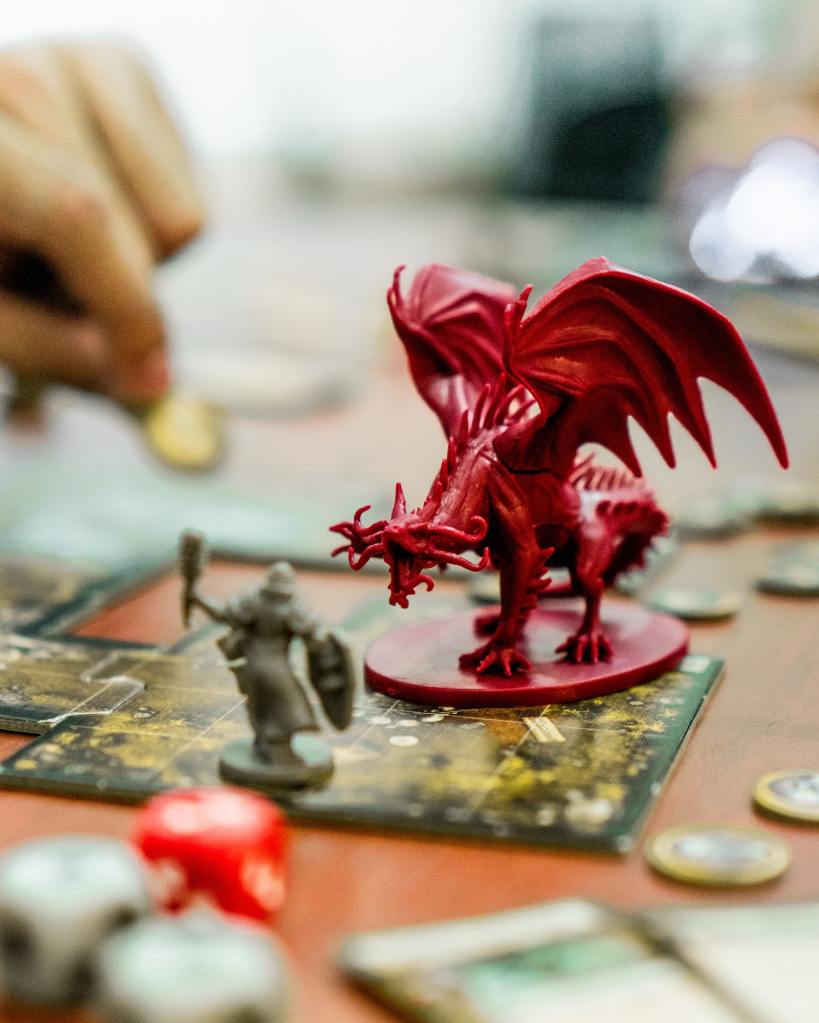
I have only ever played the computerised version of Dungeons and Dragons, the fantasy role-playing game, and the version I played was more of a battle simulator. You went on quests with your band of characters, exploring different places, constantly running into trouble. Fights would involve cold hard steel, and mysterious magical spells. Some spells had obvious intended effects, e.g. Stinking Cloud (now that’s magic that I have understood since I discovered baked beans as a kid,) Hold person. A favourite spell of mine was Charm Person, casting this spell on an enemy could instantly change them into a team-mate.

As I started practising medicine as a junior doctor I often fancifully wished that some of the Dungeons and Dragons spells would work in real life. Over the past 22 years I have searched for Heal Person, Cure wounds, Revivify and have been caught short. If only life was that easy. I often wish that I had a magic wand that could change my patients condition for the better, I really do. Or magic pills or potions that would lead to a cure. Sometimes the best magic I can offer is to soothe suffering, provide comfort, offer support. On occasions I have had to use Charm Person, and sometimes even Charm Monster.

Illness can bring out the worst in people, but some people might not have been all that easy to get along with even when they were physically well. There are no difficult people or patients but at times communicating with humans can prove to be a difficult endeavour.

Continue reading