It is important for me to do the right thing for my patients. In order to do this I need to know them well enough to know what the right thing for them is. I have my own ideas but they might be completely wrong or completely against what they think is right for them. I have to be careful not to fall into the trap of thinking that I know better than the person themselves. They are the expert when it comes to themselves not me. They are the owners of their own lives and have been making decisions for themselves for the whole of their lives. They were not born yesterday, but in the case of palliative care patients, they might die tomorrow.
I look after patients but that does not mean I own them. They own themselves. Prior to meeting me they were fully grown adults, living their own lives, making their own choices, choosing their own destinies. My job is not to tell people what to do. My job is to find out what people need and to try to help them with it. If my set of professional and personal skills can help them meet their need then I can help them. If I don’t possess the skills they need from me then I will refer on to someone who does have those skills. It’s not about me, it’s about them.
It is disrespectful to treat people as if they are children when they are fully grown adults. I worry about some people who work in palliative care doing that, treating people as if they were babies. Incapable of making their own decisions, needing us to make decisions for them. This is the wrong thing. Taking on the role of a parent, but we are not our patient’s parents. How would we feel if we were treated like that? Disempowered, disrespected, dismissed?
Working in palliative care you would think that we all live our lives without regrets. We all live each day to the fullest and try to make the most of all our relationships. Living as if it’s your last day. But, no, we don’t. It’s not happening to us, even though we know it could happen to any of us at any time.
Is it because we become desensitized to all the suffering that we witness? In people who are burnt out or suffering from compassion fatigue they may be less able to empathize with the people they are caring for. You can’t allow yourself to become enmeshed in each case you deal with. Too strong a connection, too strong an identification and each death will be felt tragically. You can only handle so many tragic events, and certainly not on a daily basis.
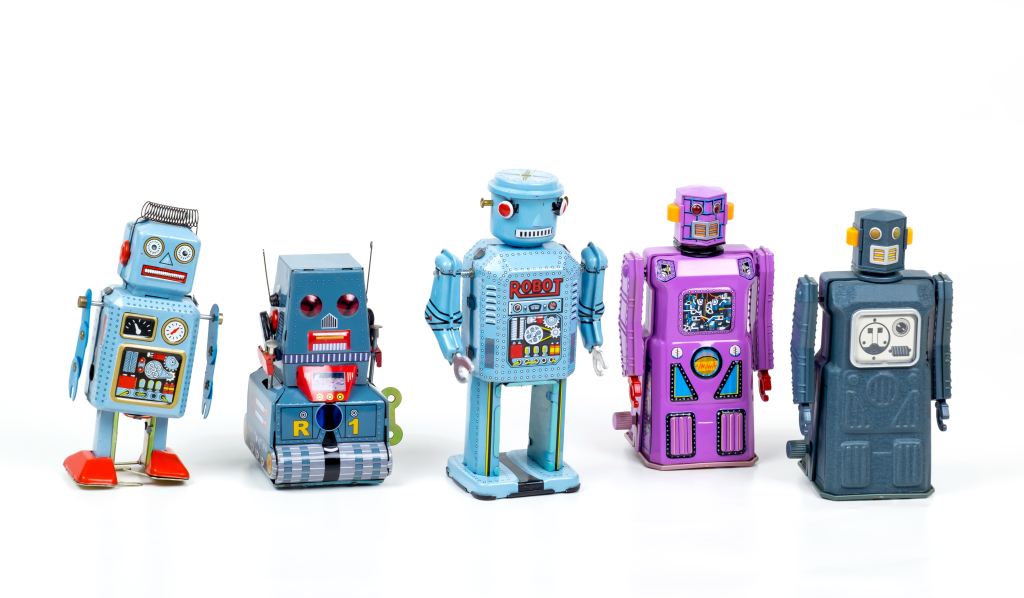
The opposite can occur, in which clinicians become too detached from their patients. They are unable to connect with a fellow human being who suffers. Patients feel like they are being looked after by a robot. Would more consistent care be delivered by robotic helpers? What is it that is so special about human clinicians? Could a robot ever be a replacement?
In the past seven weeks, I have been studying academyEX’s Digital and Collaborative Teaching and Learning micro-credential. In this blog post, I will critically analyse contemporary thinking in education. I will then critically analyse the role of digital and collaborative learning in contemporary education. In the second half, I will evaluate my practice against digital and collaborative learning and teaching. Finally, I will evaluate my practice against relevant aspects of sustainability.
Contemporary Thinking in Education
Behaviourism was the main learning theory utilised in my medical training and is reflected in the way I provide teaching as a doctor. Extrinsic motivation was provided by medical school through the set curriculum. I felt like a passive recipient of knowledge and I was tested on my ability to repeat the vast content provided over many years. This continued in the setting of medical specialist training where even more information was memorised and regurgitated during exams. A lot of knowledge is acquired but is not otherwise utilised, thus retention is poor. Learning was shallow and given the time spent it remains unclear if the return on investment is of high enough value. Other theories of learning need to be considered.
Constructivism takes a learner-centred approach. People are not completely blank slates when they arrive in medical school and may have come from various backgrounds. Some of us may bring skills and knowledge from our previous work and life experiences. The role of the mentor is to assess our prior knowledge and guide the extension of our development.
Constructionism theory involves the students creating new knowledge structures. Social products are created, and learning is by making and can be aided by technological tools such as the Google Suite and many other apps. Students are encouraged to own their learning and to make it more engaging for themselves.
The medical school shifted to experiential learning in the clinical years when we started seeing patients. I learned by dealing directly with patients and their families. Learning was by doing we were provided with hands-on opportunities. It was more engaging when I was given a chance to assess patients and come up with my own management plans. I practised doing interventions with the use of patient simulators and actors. Time for reflection was provided when I presented my findings to tutors and this also involved review of video footage of assessments. This allowed for the practice of clinical skills in simulated situations.
The role of digital and collaborative learning in contemporary education
Older education approaches may have taken a cooperative approach in which group members would be assigned various parts of a learning task to do themselves. They would all come back together to present their information to each other. This is similar to a potluck dinner in which the meal that you eat together may be a random collection of dishes which may or may not work together well.
Contemporary education requires a collaborative approach in which students come together and discuss how they will learn together, utilising a horizontal division of labour. An analogy is when people gather to cook a meal with each other. New skills and knowledge can be learned together. Everyone has a role in putting together the meal and there is a more cohesive outcome. This also helps to model how doctors could work together in collaboration with others. Garnering opinions and information from team members rather than all working completely independently. Complex wicked problems demand input from all team members who each have their individual roles to play. Everyone has a role to play in the learning situation and it models good future behaviour. Collaborating with other doctors or other services is considered good healthcare practice.
How can digital tools be incorporated into this learning? The potential audience of any digital artifacts could be vast, we don’t need to limit ourselves to face-to-face teaching any more. In 2013, when I engaged with online learning companies I was quoted $ 100,000 for the production of four 15-minute modules. In 2023 I can create my own using readily accessible apps, at low or no cost apart from my own labour.
Evaluation of my educational practice against digital and collaborative learning and teaching
The Covid-19 pandemic forced medical education to try new ways of engaging. The traditional face-to-face tuition could not be done during the many Aotearoa/New Zealand lockdowns we experienced from 2020 onwards. We learned how to do virtual assessments including home visits, clinic sessions and joint visits via the use of video-calling technologies. Joint visits allow different members of the multidisciplinary team to assess a patient together, with each member assessing the situation from their own point of view. One or more members of the team could be present either in person or virtually in a more collaborative approach.
In medical training, experiential learning is via doing with real cases being worked on together. Standard medical assessments involve assessing patients face-to-face. This assessment formulates a problem list and differential diagnoses are considered. A management plan is then drafted to treat the problems identified. Online resources could be checked to assist with any of the prior steps. The case is then presented to the clinical supervisor(s) and together a joint management plan is finalised. As the trainee becomes more experienced their level of supervision decreases until they can work independently. In the future sophisticated patient simulations could be created and could involve various team members assessing the simulated patient at the same time. As artificial intelligence improves, these scenarios could become more and more realistic. Virtual reality technology could allow virtual face-to-face interactions between clinicians and patients regardless of distance. Wearable devices could allow remote physical examination of patients. Communication between clinicians, patients and families could be improved with technology.
Evaluation of my educational practice against relevant aspects of sustainability
My educational practice involves teaching various clinicians, patients and their families about palliative care. Western medicine including palliative care has historically been a white person’s medicine and one size has never fit all. Extra effort has been required to take into account people’s cultural origins and particular emphasis has been placed on becoming culturally competent practitioners, to make our environment feel safer for all. Bilingual signage and the use of Te Reo Maori in daily conversations are now part of my workplace. We want our staff/volunteers/students to learn by immersion.
I work in a healthcare training institution but we are also citizens of the world and must play our part when it comes to climate change. Our organisation has focused on place-based learning. We have removed individual rubbish bins, have centralised waste collection and only have bins available at certain sites on our campus. We want people to actively think about where their waste will end up. What can be composted is put in the appropriate bin as is recyclable material, with an overall effort to reduce what goes to landfill. Upgrading of equipment to more energy-efficient versions continues to be done. Shifting our fleet from a fossil fuel one to an electric vehicle fleet has begun. Simple things such as providing our staff members with reusable cups and water bottles are part of the subtle encouragement of environmental sustainability.
In terms of educational sustainability, we have switched from paper-based materials to the use of digital artifacts. Short video tutorials are available on our intranet and internet sites where educational material has been curated. There is a lot of great content out there already and we encourage our staff and students to create content. We foster a culture of ongoing life-long learning. Our students are encouraged to learn how to find information rather than commit it to memory. They are encouraged to think for themselves on important issues especially how we can prepare for the future. Open questions are asked to stimulate the exploration of topics in a deeper fashion.
Conclusion
I have worked as a medical doctor for almost 24 years. When I graduated it was the start of my life-long learning. Over time, without any training, I have also become a teacher. My teaching style has been behaviourism-based as that was how I was taught. AcademyEX’s digital and collaborative teaching and learning micro-credential has exposed me to contemporary learning theories including online tools to aid teaching. It has made me ponder much about sustainability in all of its forms. It has further opened my mind to new possibilities for student engagement and to consider that my teaching needs a wider audience than people who work in the hospice. People have all sorts of preconceptions about things especially if they don’t know about them. Many people are still afraid of hospice. How can I use the skills and knowledge I have learned to make hospice/palliative care more widely known? Maybe I’ll write some more blog posts…
References
Olsen, M. & Hergenhahn, B. (2013). An Introduction to Theories of Learning (9th ed.) Pearson.
Cashman et al. (2005). Teachers Discovering Computers: Integrating Technology and Digital Media in the Classroom (4th Ed.) Course Technology.
Kolb, D.A. (1984). Experiential learning: experience as the source of learning and development. Prentice Hall.
Liu, C. H. & Matthews, R. (2005). Vygotsky’s Philosophy: Constructivism and Its Criticisms Examined. International Education Journal, 6(3), 386-399.
Papert, S. & Harel, I. (1991). Constructionism. Ablex Publishing
After almost 24 years of being a doctor my favourite part of the job remains interacting with the patients and their families. It’s true in hospice we have many serious conversations about topics that don’t get more serious than death and dying. I think there is still a place for light-heartedness and whimsy during the inpatient ward round.
A conversation about a common favourite colour of patients (purple) somehow led to the topic of wigs.
What colour is your wig?
Every colour, even purple. I’ll come back and show it to you later.
Really?
Yeah, I’m not just making it up, I’ll come back and show you my wig.
I didn’t know you were into Cosplay.
Only for selected patients.
An hour later…
Knock knock Hello.
Hello. Who is it? Oh, it’s you doctor. Do you mind coming back in again. I didn’t have my camera ready.
Sure.
Take 2
Knock, knock. Hello.
Oh, hello, who is it? Oh, it’s you doctor. You look a bit different.
Yeah every time I pick up my magic wand I feel different. Are you ready for me to cast my spell?
You’re too late, I’ve already been to the toilet.
Okay, umm, I’d better find someone else to use my wand on as it is fully charged up. Maybe a staff member.
I’ve attended regular professional supervision sessions, at least once a month, for over 13 years. I’ve worked full-time in palliative care for almost 16 years and it was recommended that I attend these sessions early in my training. The rest of the team attended sessions and it was expected that I attend them myself. I was recommended a psychologist/psychotherapist who supervised a number of my specialist colleagues at the time.
I wasn’t sure what to expect for the first session. For New Zealand men talking about your feelings is still a foreign concept even in this day let alone 16 years ago. I gave it a go and the first session was spent with my supervisor and I getting to know each other. The sessions were limited to one hour and I was encouraged to talk about any situations that had invoked feelings in me. At the time I talked about clinical situations I was dealing with. Helping patients and their families deal with their death and dying on a full-time, daily basis did take a toll on me. I found myself taking some of the cases part of the way home with me. I was witnessing tragic events a number of times a day and the raw emotions needed to be discussed. Professional supervision was an outlet for this necessary release to happen. Trust in the process developed over the next months and more feelings were shared.
This first supervision relationship lasted for six months. It was initially helpful and thus I continued. Following the penultimate session, things had changed and I found myself feeling upset for the following month. This was not how it was supposed to work. I was supposed to feel better after these sessions, not worse. First, do no harm was the principle that had been taught to us early in medical school. This was not right. I brought it up with my supervisor at the next session. He said he would address it, but I left that session feeling even worse. I decided to fire him. I became disillusioned and did not attend any further sessions for the next 18 months.
In my final year of specialist training, I was encouraged to give supervision another go, with another practitioner. This worked out much better and was much more helpful. It felt safe to discuss some of the situations which had triggered various emotions when dealing with patients and their families. Sometimes people reminded me of my own family members. Other times situations felt a bit too close to my own. An example was when I had to look after someone who had a similar background to me. I didn’t know him but we had gone to the same medical school, and we had become medical registrars at the same time. I was study buddies with some of his classmates. We passed the physician exams at the same time and started our specialist jobs in the same year. The biggest difference between us was he was dying of cancer and I wasn’t.
I’ve had many supervision sessions in the intervening years and they have kept me well. The subject matter changed as my role and responsibility changed over time. With growing experience, the clinical situations did not affect me as much as they did when I started. I have developed resilience and maintain firm boundaries to protect myself and those I care for professionally. When I had to take on managerial and leadership roles this was initially stressful. As specialist doctors, we undergo a long training process lasting at least 13 years. In our curricula, there are no sessions on management, leadership or education. These are all aspects of a specialist’s job and can be a source of stress. My supervision sessions have allowed me to look at things from other points of view and to reflect on my practice. Some months have been particularly tough and I may have needed more than one session in those months.
Overall the sessions have been of great value to me and remain one of the important self-care activities I do regularly to keep myself professionally healthy. I would recommend these sessions to anyone who wants to have a long-term career in palliative care. To anyone considering doing them, I would encourage you to give it a go. The raw emotional work of palliative care can make you feel like you are in a pressure cooker at times. We could all use a release valve to let off some steam and to stop the contents from burning (out). I’ve needed to focus more on self-care this year and professional supervision remains one of the anchors of my self-care practice. I believe that if I take care of myself better, I will be better able to take care of patients and their families.
Hospice began as a radical social movement for the purpose of caring for dying cancer patients. The philosophy has spread to many areas of the world and hospice has become institutionalised in many countries. Hospice has become part of mainstream healthcare with all the benefits and drawbacks that come with it. It has come at a cost. Hospices seem to have lost their mojo, their drive to be agents of change. They have become maintainers of not the status quo but of the stasis quo. We don’t want to change at all, some staff and volunteers may in fact wish for the good old days. When the services were small, the patient selection criteria were restricted, and life was simpler.
Has the hospice movement ground to a halt? Does the philosophy behind it need to be reassessed and redesigned? Are we brave enough to accept that we are not the experts on everything? Our populations are ageing and there will be more elderly people around than ever before. There will be more people with dementia and end-stage frailty who will need palliative care input. A huge amount of need requires our urgent attention. Our care will need to be truly patient-centric, even if the patients are unable to thank you for the care provided. We need to be reminded that we work in healthcare to help people. Our jobs exist because of patients. We need to remember it is not the other way around.
What can we do to resuscitate the hospice movement? Fresh ideas, reaching out to other groups and asking the consumers what they want. Co-design of our services needs to be done more than tokenistically. It’s time to come down off our pedestals and mix with the hoi polloi, time to get in touch with reality. Welcome back to the rest of the world. Time to wake up from our dreams and ground ourselves in practicality. We are not that special. What can one person do? Open your mind to new ideas. Listen to what your patients actually want. Remind yourself what a privilege it is to be involved in their lives. It’s not about you, it’s about them. It’s their life. What’s next?
Hospice/Palliative Care people have a reputation for being nice to patients and patients’ families. We try and treat people with respect and kindness. We try to be compassionate in our dealings with people who are extremely unwell, people who are dying and their loved ones. When time is short we want to deal with people in a calm fashion. We try to take as much stress out of their lives as possible. We work on the individual’s quality of life which is defined by them. We try our best to relieve what they think of as suffering. I’ve been working in Palliative Care for almost 16 years and I’ve often wondered why Hospice/Palliative Care teams are not always so nice to their own team members.
We don’t always treat our own team members well. Is it because we have used up all our kindness in dealing with our patients and their families? By the end of the day has the milk of human kindness been out for too long? Does it return back to base soured? Our faces may not be so cheerful. Our patience levels running on empty as we have worked on patients for hours. Why so glum chum? Have we shone our lights of external kindness so brightly that when we return back to base, the shadows we cast are that much darker?
We might not always like our patients, but we have a duty to treat them with respect. I can’t get angry with my patients so I look for other people to take it out on. Does this lead to us saving up our bad behaviour for our own people? External facing angelic beings, but the wings become whinges when we look inwards at our own people? It doesn’t have to be this way. What can we do to change Hospice/Palliative Care? Do we need to do a complete re-haul? Start all over again and involve patients and their families as co-designers. Can we encourage our team members to behave better towards each other? Can we create a more understanding, respectful and resilient workplace culture?
I am a child of immigrants and I grew up in a small city in New Zealand. I looked different to everyone else, at home I spoke a different language and ate different food compared to my classmates. Because of these differences, I always felt I was not as Kiwi as they were. We learned exactly the same things at school but our home lives were dissimilar.
When I was seven years old I had heard from my classmates about the tooth fairy. They told me that if your tooth comes out put it in an envelope and place it under your bed. The tooth fairy will take your tooth away and exchange it for money. I thought it would be a good swap as I didn’t need the tooth any more. I popped the tooth into the envelope, and addressed it, “To the Tooth Fairy.” I placed the little package under my bed, stirring up lots of dust which made me sneeze. For the next week, I checked on the little package every day after school. I opened it up expecting to find some cash, but all I could see each time was the same old tooth. After seven times and many sneezy afternoons with itchy eyes, I gave up on the tooth fairy. She was added to my list of fakes along with Father Christmas and the Easter Bunny.
Each afternoon when I arrived home I would have to take my shoes off and put on indoor slippers. I was expected to speak to my parents and brother in Mandarin Chinese. We would always have rice for dinner and it would be Chinese food. My parents had lived in New Zealand for a while by this time but they still did not like the local food. Back in those days if they wanted to eat things like steamed buns they would have to make them from scratch. They learned how to make their own egg noodles and wonton wrappers. Once a year we would all go on a road trip to one of the bigger cities to buy Chinese groceries that were not available in my home town. Pantry staples such as soya sauce, peanut oil, short-grained rice and canned foods. My parents seemed to have different ideas and values compared to my classmates’ parents. They often talked about how different it was for them when they were children. Despite my best efforts I could never be as Chinese as my parents were. I often found myself having to be a bridge between the two worlds.
I ended up growing up in between the local Kiwi culture and my parents’ more traditional Chinese culture. I was constantly reminded about how incompletely I fit into neither culture. At times I felt different and misunderstood by everyone. In between two worlds and searching for a world of my own. Maybe this influenced my career choice. Palliative care operates in the space between the usual healthcare world of saving lives and death. I find myself being the bridge between two healthcare cultures, not fully feeling like I belong in either camp. What’s new?
The family were trying to protect our patient. They knew that his time would be short, that he would die soon. They didn’t want him to know this as the last time he had been given such bad news he had reacted poorly. They said he had been in tears for two days after the hospital doctors had told him bluntly that he could die at any time. They didn’t want a repeat of what had happened. If he only had a short time left they wanted him to enjoy it as much as possible. This was what his life partner wanted, the person who knew him better than anyone else. The love of his life.
Did he know what was going on? Probably. He had said he thought things were bad. We had not denied this. He was the one feeling every single discomfort. He was the one who was exhausted from lying in bed doing nothing. He was the one whose body continued deteriorating on an almost daily basis. He was the one who had asked to be admitted. He was worried about how his family were coping with looking after him at home. He had been told weeks prior to this admission that he possibly only had days left to live. When we asked him if there was anything he still needed to do, any unfinished business, the reply was,” No. I’ve done everything I can. I’ve done well. I have no regrets. I have a good family. We raised our children well.”
Our duty of care is to our patients. “First do no harm“ is the first principle we follow. Would telling him what he probably already knew be of benefit or would it cause harm? It was unclear as we didn’t know him well enough. For some people knowing they might only have a few days left could provide relief. They might be thankful that their suffering would not go on for much longer. For others, the short time left would provoke anxiety and distress. They would be upset by the thought of having to leave their family for the final time. If he were to directly ask us, we could not lie to him. But if he never asked we would not raise the question ourselves. His partner had made the decision. The survivors of his death had to be given the opportunity to do what was right for their family. No matter what would happen, we promised that we would try our best to keep him comfortable in what time remained.
I work in one of the most ethnically diverse areas in the southern hemisphere, South Auckland. There are people from many different places who now call this area home. English may well be a second, third or even fourth language to many of my patients and their families. Many different native languages are spoken and on any given day our inpatient unit may be full of people representing many different groups.
I make an effort to learn how to say simple common greetings in the native language of my patients. Over many years I have gathered a list of these greetings. If I don’t know the standard greeting I will resort to an internet search for the appropriate greeting before I meet the patient. A simple “hello” in their native language is usually appreciated and is the first step in building rapport. If I know more words in their language I’ll make use of as many as I can during the rest of the consultation. When trying to make a connection you usually only have one shot, make it a good one.






 palliverse.com