Palace of Care – The Pickup Truck

Photo by Erik Mclean on Unsplash

We had to remind ourselves every day when driving down the hospice driveway to be careful when entering the car park. The pickup truck was always parked in the first parking space. A long vehicle anyway but the driver would always have it parked so the back part of the truck would be sticking out into the main thoroughfare. Everyone else who wanted to park in the hospice car park would have to make sure that they didn’t hit the back of the pickup truck. It had gotten to the point that local authorities were considering installing a specific traffic light to warn other drivers of the potential danger. No matter what time of the day or night it was the pickup truck was always there, for months on end. It was an almost constant presence that we could tell time by the shadows cast by the sun shining on it – a Japanese assembly-line manufactured sundial weighing over a tonne. Local mosses tried to grow on it with limited success. If you looked up the hospice campus on Google Maps the truck would appear on the provided image. It was always there, for months.

The truck belonged to the father of one of our younger patients. A shy young man who was very private and did not want anyone but his father to help him with showering. A devoted father who doted on his ailing son. He had attended every specialist appointment with his son. He wanted to be involved in every treatment discussion and decision. He tried to do his best to keep his son alive, and it worked to some extent. He was ever vigilant on behalf of his boy, as at the start of the son’s illness it had taken a while for him to be diagnosed. The son’s plight was reflective of the health disparities that affect some members of our population. The reality of institutional racism throughout our health system meant that the son’s story about abdominal pain and weight loss was discounted for six months. By the time his terminal cancer diagnosis was finally made, the cancer had spread to many parts of his body, causing a lot of pain.

The father and son had both been scared of hospice when they were first referred. Their oncologist had to persuade them to give us a go. Our staff assessed his pain control which was poor and asked him to consider admission into our inpatient unit for pain control. It took many conversations and for the pain to become unbearable before they were admitted. Everything needed to be discussed with the father, he couldn’t trust the healthcare system because of the way they had treated his son in the past. Given New Zealand’s track record, I couldn’t blame him for his lack of trust. On the first admission, we were able to bring the pain under control quickly, and days later he went home.

Over the next months, our patient would be re-admitted several times. His father would be there with him most days, and hence the pickup truck became part of our car park again. Our patient’s health slowly deteriorated over many weeks. The father and son who had been so wary in regards to coming into hospice were now too scared to leave. They felt safer in our place than in their place. In the last weeks of his stay, there were several times when we thought our patient was about to die, that he was parked too close to the edge of the clifftop and was falling over. Somehow he would reverse his way back to the edge again. Less than a week later it looked like this was it, half of the chassis was over the cliff edge. Some incredible inner strength would pull him back again. The doctors stopped trying to prognosticate, we kept getting it wrong. Anyone else would have died weeks or months ago.

It came as a shock to all of us when we didn’t have to take a wider berth when navigating our car park. The pickup truck which had been there for almost half a year was gone. The father did not need to stay in the hospice any more. His son had been taken away in another long vehicle by another exit for his final journey. After many months together with them, most of us didn’t get the chance to say goodbye, to the son or the father. That’s the way it goes sometimes, we don’t always get a chance to partake in the closure that we need. Goodbye. We wish you safe travels, both of you.
Palace of Care -The After School Run

Photo by Andrew Slifkin on Unsplash

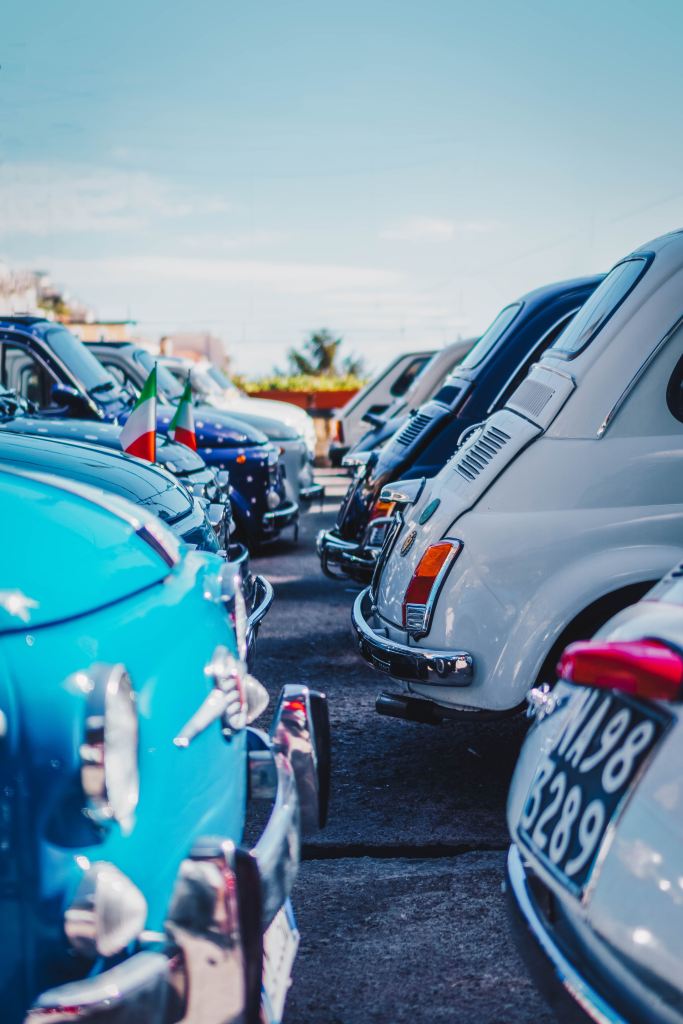
A situation familiar to many modern parents. Making their way through rush hour traffic to pick up their children who possibly attend a number of different schools spread throughout busy cities. The GPS recommended fastest route would only work if your car could sprout wings and fly over traffic. Another of the more stressful times of the day, the morning school drop-off being the first one. You finally arrive at the school gate and then the stress levels increase even more. Hundreds of similar parents vying for a small number of legal car parking spaces. Scanning the roads surrounding the school for a hint of a place to stop. Trying your best not to run anyone over, having to make your way around cars that have double or triple-parked. You make your way onto the grass berm next to the road. You pull your handbrake to immobilise vehicle staking your claim to this treasured location. You rush out of your car and sprint towards the school gate as if you are about to complete a marathon. Exhausted, about to collapse, running on sheer willpower alone. Next up for this sporting event is trying to find your child in a sea of other children wearing completely the same clothing. The good old bastion of conformity the school uniform. A blur of green and blue as children walk, run, skip on their way out of school. Is that my daughter? Is that my son? No, that kid just looks like them. No, that’s one of the more vertically challenged teachers. There’s my precious. As time is running out you haul them over your shoulders in a fireman’s carry and race to your car. Buckling them into their car seat as if it was straitjacket. Only three more to pick up….

Stressful enough on any standard school day, the school pick-up becomes even more stressful when the other parent is dying in the local hospice inpatient unit. At 4pm every afternoon the children of two different families would arrive to see their unwell parent. Typical Kiwi kids wearing a number of different school uniforms. Various lengths of hair, various ages and stages, brought together for the same purpose. Trying to spend as much time as possible with a parent who might not be around for much longer. A heart-warming sight but at the same time heart-breaking. In the future these school aged children would likely remember visiting their parent at the local hospice. I hope that their memories aren’t too bad. I hope it wasn’t a scary place for them. I hope that they felt welcomed. I hope their family tells them later on how meaningful their visits were for their late parent. I hope they are told how much their parent loved them and had tried their best to stay alive as long as possible, much longer than most people did. How their parent held on for their birthdays, their first day of school, or for their graduation and other important milestones. I hope they can remember the happier times when one of their parents wasn’t dying and they always did things as a family.

Every birthday from now on, there will be someone missing from the celebration. Christmas and New Year will not feel the same any more. Life will go on but it will be different. Who will take the kids fishing for eels? Who will teach the kids how to drive? Or how to cook? Or how to sew clothing? Someone will be missing when they turn 21. If they get married, someone else will walk them down the aisle. The youngest kids might not remember much about their parent at all.

Please make the most of each day. Time with children and family is so darn precious.

Palace of Care – Orbital Crossover

Left – pyjama pants, Right – neck pillow hoodie

Her pyjama pants were brightly coloured. They had repeated patterns printed on them. I didn’t have my glasses on and I had walk closer towards her to see what they actually were. The fuzzy, blurry lines sharpened. The shapes were dogs, lots of different breeds. Each of the dogs was holding an item of food. It reminded me of one of my own favourite work items. My hooded neck pillow with pictures of all the health food groups. French fries, hot dogs, pizzas, hamburgers and more. The greasier the better. Guaranteed to line your arteries within minutes of ingestion. I promised to visit again.

We hadn’t seen each other for many months. Things had not gone so smoothly the last time we had met. We had both changed. Lives had carried on. Holidays had been spent in distant locales. We had both ventured away from the familiar comforts of home. We had both talked in front of many different audiences. I had a two week break from work. Two weeks ago she had taken her final break from work. I had started exercising more and having more fights (Brazilian Jiu Jitsu). She had become less active and had given up on her fight. My life was becoming busier. Her life was slowing down. My world continues to expand as her world shrinks down.

We weren’t sure if we would meet again but here we are. I will try my best to make her more comfortable. We both know that her time is running out. We will try to make the most of the time she has left. I will make changes to her medications to try and relieve her suffering. I can’t take away her existential suffering. I cannot make whole what is falling apart at her centre. She could handle all the changes but the illness has made her mouth shrink, her dentures don’t fit any more, and she can’t smile her usual smile. That’s what hurts, that she can’t be who she always has been. She doesn’t feel like herself any more. I know she is an actor and I told her she doesn’t need to act in front of me. I need to know what is really going on in order to help her. I need her to be herself. Her deteriorating self. She can accept that death is approaching. What’s difficult is the dying process.

Grief doesn’t just occur when someone dies, it starts much sooner than that. People grieve as soon as they start losing things. Having to let go of something you have pursued with passion for a life time. Having to say goodbye to a job that was a vocation. Having to handover the mission to someone else. The school would never be the same again, but she wants it to move on without her. To keep on growing and developing young people. Igniting the spark of self-discovery. Feeding the nascent self-confidence. Inspiring youth to aim for the stars. To believe in themselves, to push themselves, to become somebody. “If you want to be a teacher, you have to love kids.” No-one loved the kids more than she did. And look where they have ended up. Starring in shows of their own. All because one of their high school teachers believed in them, twenty years ago. I can think of worse legacies to leave behind.

I think therefore I am? – Right and Wrong

Photo by Andrej Lišakov on Unsplash

It is important for me to do the right thing for my patients. In order to do this I need to know them well enough to know what the right thing for them is. I have my own ideas but they might be completely wrong or completely against what they think is right for them. I have to be careful not to fall into the trap of thinking that I know better than the person themselves. They are the expert when it comes to themselves not me. They are the owners of their own lives and have been making decisions for themselves for the whole of their lives. They were not born yesterday, but in the case of palliative care patients, they might die tomorrow.

I look after patients but that does not mean I own them. They own themselves. Prior to meeting me they were fully grown adults, living their own lives, making their own choices, choosing their own destinies. My job is not to tell people what to do. My job is to find out what people need and to try to help them with it. If my set of professional and personal skills can help them meet their need then I can help them. If I don’t possess the skills they need from me then I will refer on to someone who does have those skills. It’s not about me, it’s about them.

It is disrespectful to treat people as if they are children when they are fully grown adults. I worry about some people who work in palliative care doing that, treating people as if they were babies. Incapable of making their own decisions, needing us to make decisions for them. This is the wrong thing. Taking on the role of a parent, but we are not our patient’s parents. How would we feel if we were treated like that? Disempowered, disrespected, dismissed?

I think therefore I am? – Life is too short

Photo by Eric Krull on Unsplash

Working in palliative care you would think that we all live our lives without regrets. We all live each day to the fullest and try to make the most of all our relationships. Living as if it’s your last day. But, no, we don’t. It’s not happening to us, even though we know it could happen to any of us at any time.

Is it because we become desensitized to all the suffering that we witness? In people who are burnt out or suffering from compassion fatigue they may be less able to empathize with the people they are caring for. You can’t allow yourself to become enmeshed in each case you deal with. Too strong a connection, too strong an identification and each death will be felt tragically. You can only handle so many tragic events, and certainly not on a daily basis.

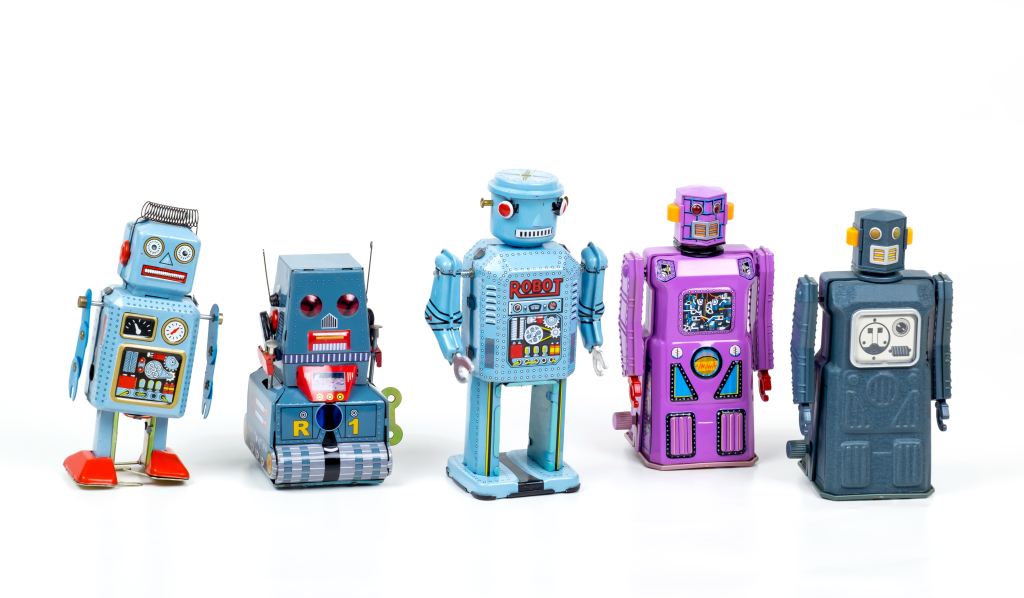
The opposite can occur, in which clinicians become too detached from their patients. They are unable to connect with a fellow human being who suffers. Patients feel like they are being looked after by a robot. Would more consistent care be delivered by robotic helpers? What is it that is so special about human clinicians? Could a robot ever be a replacement?

Palace of Care – Still my favourite thing

After almost 24 years of being a doctor my favourite part of the job remains interacting with the patients and their families. It’s true in hospice we have many serious conversations about topics that don’t get more serious than death and dying. I think there is still a place for light-heartedness and whimsy during the inpatient ward round.

A conversation about a common favourite colour of patients (purple) somehow led to the topic of wigs.

What colour is your wig?

Every colour, even purple. I’ll come back and show it to you later.

Really?

Yeah, I’m not just making it up, I’ll come back and show you my wig.

I didn’t know you were into Cosplay.

Only for selected patients.

An hour later…

Knock knock Hello.

Hello. Who is it? Oh, it’s you doctor. Do you mind coming back in again. I didn’t have my camera ready.

Sure.

Take 2

Knock, knock. Hello.

Oh, hello, who is it? Oh, it’s you doctor. You look a bit different.

Yeah every time I pick up my magic wand I feel different. Are you ready for me to cast my spell?

You’re too late, I’ve already been to the toilet.

Okay, umm, I’d better find someone else to use my wand on as it is fully charged up. Maybe a staff member.

I think therefore I am? – Professional Supervision

Photo by Bruno van der Kraan on Unsplash

I’ve attended regular professional supervision sessions, at least once a month, for over 13 years. I’ve worked full-time in palliative care for almost 16 years and it was recommended that I attend these sessions early in my training. The rest of the team attended sessions and it was expected that I attend them myself. I was recommended a psychologist/psychotherapist who supervised a number of my specialist colleagues at the time.

I wasn’t sure what to expect for the first session. For New Zealand men talking about your feelings is still a foreign concept even in this day let alone 16 years ago. I gave it a go and the first session was spent with my supervisor and I getting to know each other. The sessions were limited to one hour and I was encouraged to talk about any situations that had invoked feelings in me. At the time I talked about clinical situations I was dealing with. Helping patients and their families deal with their death and dying on a full-time, daily basis did take a toll on me. I found myself taking some of the cases part of the way home with me. I was witnessing tragic events a number of times a day and the raw emotions needed to be discussed. Professional supervision was an outlet for this necessary release to happen. Trust in the process developed over the next months and more feelings were shared.

This first supervision relationship lasted for six months. It was initially helpful and thus I continued. Following the penultimate session, things had changed and I found myself feeling upset for the following month. This was not how it was supposed to work. I was supposed to feel better after these sessions, not worse. First, do no harm was the principle that had been taught to us early in medical school. This was not right. I brought it up with my supervisor at the next session. He said he would address it, but I left that session feeling even worse. I decided to fire him. I became disillusioned and did not attend any further sessions for the next 18 months.

In my final year of specialist training, I was encouraged to give supervision another go, with another practitioner. This worked out much better and was much more helpful. It felt safe to discuss some of the situations which had triggered various emotions when dealing with patients and their families. Sometimes people reminded me of my own family members. Other times situations felt a bit too close to my own. An example was when I had to look after someone who had a similar background to me. I didn’t know him but we had gone to the same medical school, and we had become medical registrars at the same time. I was study buddies with some of his classmates. We passed the physician exams at the same time and started our specialist jobs in the same year. The biggest difference between us was he was dying of cancer and I wasn’t.

I’ve had many supervision sessions in the intervening years and they have kept me well. The subject matter changed as my role and responsibility changed over time. With growing experience, the clinical situations did not affect me as much as they did when I started. I have developed resilience and maintain firm boundaries to protect myself and those I care for professionally. When I had to take on managerial and leadership roles this was initially stressful. As specialist doctors, we undergo a long training process lasting at least 13 years. In our curricula, there are no sessions on management, leadership or education. These are all aspects of a specialist’s job and can be a source of stress. My supervision sessions have allowed me to look at things from other points of view and to reflect on my practice. Some months have been particularly tough and I may have needed more than one session in those months.

Overall the sessions have been of great value to me and remain one of the important self-care activities I do regularly to keep myself professionally healthy. I would recommend these sessions to anyone who wants to have a long-term career in palliative care. To anyone considering doing them, I would encourage you to give it a go. The raw emotional work of palliative care can make you feel like you are in a pressure cooker at times. We could all use a release valve to let off some steam and to stop the contents from burning (out). I’ve needed to focus more on self-care this year and professional supervision remains one of the anchors of my self-care practice. I believe that if I take care of myself better, I will be better able to take care of patients and their families.

I think therefore I am? – Whatever happened to the hospice movement?

Photo by Patti Black on Unsplash

Hospice began as a radical social movement for the purpose of caring for dying cancer patients. The philosophy has spread to many areas of the world and hospice has become institutionalised in many countries. Hospice has become part of mainstream healthcare with all the benefits and drawbacks that come with it. It has come at a cost. Hospices seem to have lost their mojo, their drive to be agents of change. They have become maintainers of not the status quo but of the stasis quo. We don’t want to change at all, some staff and volunteers may in fact wish for the good old days. When the services were small, the patient selection criteria were restricted, and life was simpler.

Has the hospice movement ground to a halt? Does the philosophy behind it need to be reassessed and redesigned? Are we brave enough to accept that we are not the experts on everything? Our populations are ageing and there will be more elderly people around than ever before. There will be more people with dementia and end-stage frailty who will need palliative care input. A huge amount of need requires our urgent attention. Our care will need to be truly patient-centric, even if the patients are unable to thank you for the care provided. We need to be reminded that we work in healthcare to help people. Our jobs exist because of patients. We need to remember it is not the other way around.

What can we do to resuscitate the hospice movement? Fresh ideas, reaching out to other groups and asking the consumers what they want. Co-design of our services needs to be done more than tokenistically. It’s time to come down off our pedestals and mix with the hoi polloi, time to get in touch with reality. Welcome back to the rest of the world. Time to wake up from our dreams and ground ourselves in practicality. We are not that special. What can one person do? Open your mind to new ideas. Listen to what your patients actually want. Remind yourself what a privilege it is to be involved in their lives. It’s not about you, it’s about them. It’s their life. What’s next?

I think therefore I am? – Why Can’t We All Just Get Along?

Photo by Husna Miskandar on Unsplash

Hospice/Palliative Care people have a reputation for being nice to patients and patients’ families. We try and treat people with respect and kindness. We try to be compassionate in our dealings with people who are extremely unwell, people who are dying and their loved ones. When time is short we want to deal with people in a calm fashion. We try to take as much stress out of their lives as possible. We work on the individual’s quality of life which is defined by them. We try our best to relieve what they think of as suffering. I’ve been working in Palliative Care for almost 16 years and I’ve often wondered why Hospice/Palliative Care teams are not always so nice to their own team members.

We don’t always treat our own team members well. Is it because we have used up all our kindness in dealing with our patients and their families? By the end of the day has the milk of human kindness been out for too long? Does it return back to base soured? Our faces may not be so cheerful. Our patience levels running on empty as we have worked on patients for hours. Why so glum chum? Have we shone our lights of external kindness so brightly that when we return back to base, the shadows we cast are that much darker?

We might not always like our patients, but we have a duty to treat them with respect. I can’t get angry with my patients so I look for other people to take it out on. Does this lead to us saving up our bad behaviour for our own people? External facing angelic beings, but the wings become whinges when we look inwards at our own people? It doesn’t have to be this way. What can we do to change Hospice/Palliative Care? Do we need to do a complete re-haul? Start all over again and involve patients and their families as co-designers. Can we encourage our team members to behave better towards each other? Can we create a more understanding, respectful and resilient workplace culture?

I think therefore I am? – Greetings

Photo by Katie Moum on Unsplash

I work in one of the most ethnically diverse areas in the southern hemisphere, South Auckland. There are people from many different places who now call this area home. English may well be a second, third or even fourth language to many of my patients and their families. Many different native languages are spoken and on any given day our inpatient unit may be full of people representing many different groups.

I make an effort to learn how to say simple common greetings in the native language of my patients. Over many years I have gathered a list of these greetings. If I don’t know the standard greeting I will resort to an internet search for the appropriate greeting before I meet the patient. A simple “hello” in their native language is usually appreciated and is the first step in building rapport. If I know more words in their language I’ll make use of as many as I can during the rest of the consultation. When trying to make a connection you usually only have one shot, make it a good one.